



 Send Inquiry
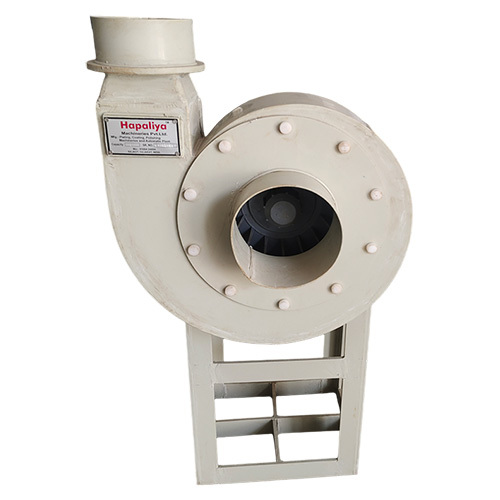
Acid Fume Exhaust Blower
About Acid Fume Exhaust Blower
Overview
- Heavy-duty PP grade acid exhaust blower for corrosive environments.
- Variants 1hp 2800 rpm, 2hp 2800 rpm, 3hp 2800 rom
- Heavy duty only PP fabricated blower.
- Approx. 5 years maintenance free blower life.
- Iniet & outlet as per PVC standard.
- PP motor cover for motor safety.
- 2800 rpm heavy duty motor with SS shaft.
- Oil-sealed casing for long life bearing.
Superior Acid Resistance with Polypropylene Construction
Utilizing high-grade polypropylene material, the blower ensures extraordinary corrosion resistance and durability, making it suitable for environments where acid fumes are prevalent. This design extends the equipment life and cuts down maintenance costs even in highly corrosive settings found in chemical and pharmaceutical industries.
Customizable Solutions for Varied Industrial Needs
Each blower is tailored precisely to the client's dimensional, capacity, and installation requirements, ensuring compatibility with existing setups. Designed in accordance with IS/ISO standards, the blower offers flexible static pressure, airflow, and mounting orientations to best match industry-specific applications and operational conditions.
FAQ's of Acid Fume Exhaust Blower:
Q: How does a centrifugal acid fume exhaust blower function in industrial settings?
A: A centrifugal acid fume exhaust blower operates by drawing contaminated air (including acidic vapors) from process areas and expelling it safely outside or through a scrubbing unit. The backward-curved polypropylene impellers ensure effective movement of air while resisting corrosive attack, protecting internal components and ensuring reliable performance.Q: What makes polypropylene (PP) the preferred impeller and construction material?
A: Polypropylene is favored due to its excellent chemical resistance, especially against acid fumes common in chemical, pharmaceutical, and laboratory applications. It offers superior durability, minimizes corrosion-related failures, and requires less frequent replacement, thus lowering overall operational costs.Q: When is it beneficial to opt for a belt drive versus a coupling drive in these blowers?
A: Belt drives are typically chosen for their ease of maintenance and replacement, especially when frequent speed adjustments are needed. Coupling drives suit applications requiring precise alignment and minimal maintenance, enhancing efficiency for continuous and demanding processes.Q: Where should an acid fume exhaust blower be installed for optimal performance?
A: For best results, these blowers are floor-mounted (base mounted) adjacent to or near fume sources such as chemical process tanks or laboratory workspaces. Their installation must allow easy access for maintenance and integration with wet scrubber systems for effective air treatment.Q: What is the process for integrating this blower with existing wet scrubber systems?
A: Integration involves connecting the blower's discharge outlet to the scrubber's inlet, ensuring proper sealing to prevent leaks. The blower efficiently channels fume-laden air into the scrubber, where contaminants are neutralized before exhaust, creating a safer environment compliant with industrial emission standards.Q: How can users benefit from the blower's customizable design and efficiency?
A: Customizing dimensions and performance specifications allows seamless incorporation into any existing workflow, optimizing space and resource utilization. With efficiency rates of 80% or higher and low noise output (<80 dB), users benefit from energy savings, reduced noise pollution, and enhanced workplace safety.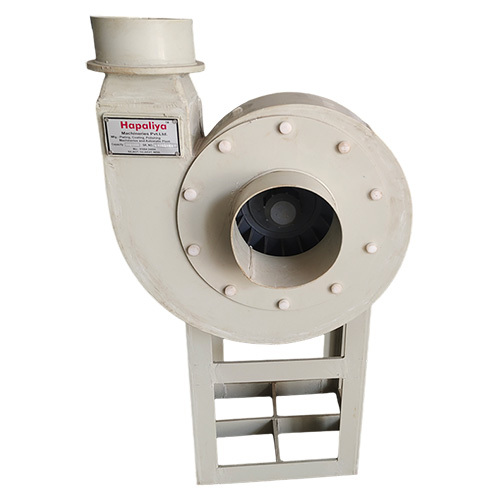
Tell us about your requirement

Price:
Quantity
Select Unit
- 50
- 100
- 200
- 250
- 500
- 1000+
Additional detail
Mobile number
Email

More Products in Acid Fume Exhaust Blower Category

Quick Inquiry


Contact Details
HAPALIYA MACHINERIES PRIVATE LIMITED
GST : 24AAHCH3428D1ZY
GST : 24AAHCH3428D1ZY
Plot No. 8, Vavdi Ind. Area, Nr. Tulip Party Plot, N.H.-8, Gondal Road, Rajkot - 360002, Gujarat, India
Phone :08037734050
 Send Inquiry
 |
HAPALIYA MACHINERIES PRIVATE LIMITED
All Rights Reserved.(Terms of Use) Developed and Managed by Infocom Network Private Limited. |
